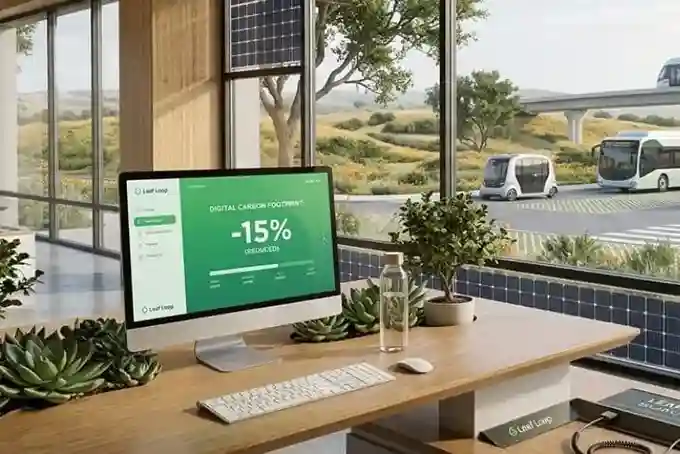


Introduction: The Hidden Environmental Cost of Data
Reducing your digital carbon footprint is the invisible challenge of 2026. While we often focus on plastic waste or car emissions, our online lives—from endless emails to high-definition streaming—require massive amounts of energy to power global data centers. Every megabyte stored and every search performed contributes to global warming. At Leaf Loop, we believe that true sustainability extends from the physical world into the digital realm. By following these 7 best ways to reduce your digital carbon footprint, you can make your tech habits as green as your home.
1. Clean Your Cloud: The Power of Deleting
Every old email, blurry photo, and duplicate document stored in the cloud sits on a server that consumes electricity 24/7. One of the most effective digital carbon footprint reduction strategies is a regular “digital declutter.” Deleting 1,000 unread emails can save approximately 10kg of $CO_2$ per year. Make it a monthly habit to clear out your trash and unsubscribe from newsletters you no longer read.
2. Optimize Your Streaming Habits
Video streaming accounts for a significant portion of global internet traffic. To lower your *digital carbon footprint, consider reducing your video quality from 4K to HD or SD, especially on mobile devices where the difference is barely noticeable. According to the International Energy Agency (IEA), streaming in lower resolutions can significantly decrease the energy load on network infrastructure.
Digital Habits: Carbon Impact Comparison
To understand the true weight of our online presence, we must look at the data. Below is a comparison of common daily activities and their estimated carbon impact. These figures highlight why shifting to eco-friendly alternatives is crucial for a sustainable 2026.
| Activity (1 Hour) | Carbon Footprint ($CO_2$) | Eco-Friendly Alternative |
|---|---|---|
| 4K Video Streaming | ~450g | Stream in Standard Definition (SD) |
| Video Conferencing (On) | ~150g | Audio-only call when possible |
| Storing 1GB in Cloud/Year | ~7kg | Move to local external drive |
| Sending 50 Emails with Attachments | ~250g | Use shared links (Google Drive/Dropbox) |
3. Use Eco-Friendly Search Engines
Not all search engines are created equal. Switching to tools like Ecosia allows you to plant trees while you search, effectively offsetting the energy used for your queries. This is a simple, set-and-forget way to ensure your daily browsing supports reforestation projects rather than just consuming electricity.
4. Embrace Dark Mode for Energy Saving
If you use a device with an OLED screen, “Dark Mode” isn’t just a style choice; it’s an energy-saving necessity. Dark pixels on OLED displays are actually turned off, consuming zero power. By enabling Dark Mode across all your apps and operating systems, you can extend your battery life and reduce the overall power demand of your hardware, further shrinking your digital carbon footprint.
5. The “Unplugged” Culture: Offline Sustainability
In 2026, the most sustainable digital act is to spend less time digital. Reducing screen time not only benefits your mental health but also lowers the demand for data transmission. At Leaf Loop, we encourage “Analog Afternoons” where you swap the tablet for a physical book or a walk in nature, directly cutting your reliance on energy-intensive digital services.
6. Extend Hardware Life and Repair
The manufacturing of a smartphone or laptop accounts for nearly 80% of its total lifetime carbon impact. Instead of upgrading to the latest model every year, focus on maintenance and repair. Keeping your devices for 4 or 5 years instead of 2 can nearly halve their annual carbon impact. This aligns with our principles of Sustainable Personal Care—taking care of what we already own.
7. Choose Green Web Hosting for Your Own Sites
If you run a blog or a business, your website itself has a digital carbon footprint. Moving your site to a host that uses 100% renewable energy is a massive step. Organizations like the Green Web Foundation provide a database where you can check if your current hosting provider is truly eco-friendly or just “greenwashing.”
Frequently Asked Questions (FAQ)
- Does Dark Mode really save energy?
- Yes! On OLED and AMOLED screens, dark pixels are essentially “turned off,” saving up to 30% of battery life and reducing power demand.
- What is the “Greenest” way to use the internet?
- The greenest way is to use a wired connection (Ethernet) instead of Wi-Fi or 5G, as it is much more energy-efficient for data transmission.
Conclusion: Making Every Click Count
Our digital footprint may be invisible, but its impact is very real. By implementing these 7 best ways to reduce your digital carbon footprint, you are taking a holistic approach to sustainability in 2026. At Leaf Loop, we believe that every small action—from deleting an email to choosing an eco-friendly search engine—builds toward a cleaner, greener future for both our physical and digital worlds.