
The Silent Crisis in Our Kitchens
Learning how to stop wasting food is one of the most impactful steps you can take for a sustainable lifestyle, Did you know that according to the FAO food waste report, nearly one-third of all food produced globally is lost or wasted? This is not just a statistic; it is a call to action for every household. When we throw away a withered carrot or a half-eaten loaf of bread, we aren’t just wasting food, we are wasting the water, labor, and energy it took to bring that food to our table.
At Leaf Loop, we believe that the kitchen is the battlefield for sustainability. To truly **stop wasting food, you don’t need expensive gadgets, you need a shift in mindset and a few *sustainable kitchen habits. This guide will walk you through 10 transformative steps to reduce your waste and your carbon footprint simultaneously.
1. Master the Art of Intentional Meal Planning
The primary reason we fail to stop wasting food is a lack of a plan. How many times have you bought a bag of spinach only for it to turn into “green slime” in your fridge?
- The Strategy: Spend 15 minutes every Sunday auditing your pantry.
- The Rule: Shop your kitchen first, then your grocery store.
By creating a strict shopping list based on what you actually intend to cook, you eliminate impulse buys that often end up in the trash.
2. Deciphering Date Labels: Use By vs. Best Before
Confusion over date labels is a leading cause of domestic food waste.
- Use By: This is a safety date. You should generally not consume food past this date.
- Best Before: This is a quality indicator. Bread might be slightly dry, or a cracker might lose its crunch, but it is still safe to eat.
To stop wasting food, rely on your senses (sight and smell) rather than blindly following a “Best Before” stamp.
3. Scientific Food Storage Solutions
Proper storage can extend the life of your groceries by weeks. Understanding which fruits and vegetables emit ethylene gas (which speeds up ripening) is key to an eco-friendly food storage strategy.
Food Longevity Comparison Table
| Food Category | Standard Life | Extended Life with Smart Storage | Pro Storage Tip |
|---|---|---|---|
| Leafy Greens | 3 Days | 10 Days | Wrap in a dry cloth in a sealed container. |
| Berries | 4 Days | 9 Days | Wash in a vinegar-water solution before storing. |
| Potatoes | 2 Weeks | 2 Months | Store in a cool, dark place away from onions. |
| Herbs | 2 Days | 7 Days | Store upright in a glass of water like flowers. |
4. The “Ugly” Food Revolution
We live in a world obsessed with aesthetic perfection, even in our produce. Supermarkets often discard “ugly” vegetables that are perfectly nutritious. By intentionally buying bruised apples or curved cucumbers, you help stop wasting food at the supply chain level. Remember: a “funny-looking” tomato tastes exactly like a “perfect” one in a sauce.
5. Reviving Wilting Produce
Before you toss those limp carrots or sad-looking celery stalks into the bin, try a “revival bath.” Submerging wilted vegetables in a bowl of ice water for 30 minutes can often restore their crispness. This is a vital part of your zero-waste journey.
6. Organize Your Fridge Using “FIFO”
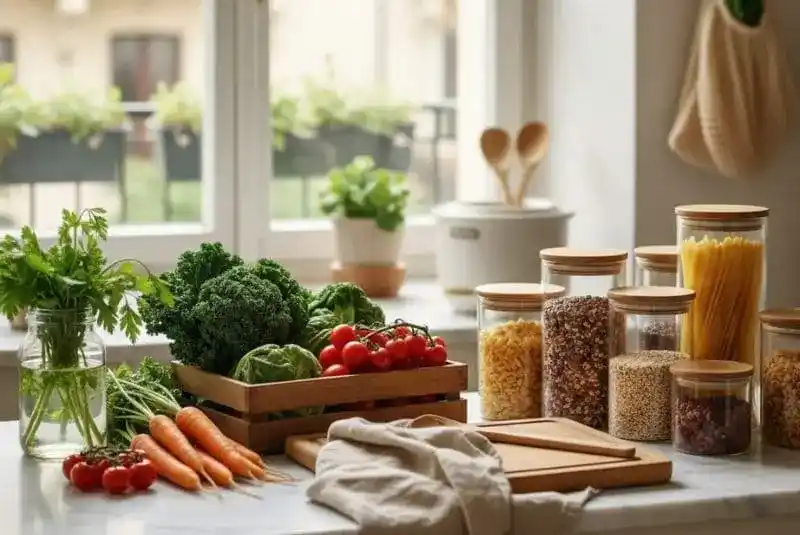
“First In, First Out” (FIFO) is a professional kitchen technique that every home should adopt. When you restock your fridge, move older items to the front and place new items at the back. Using clear glass sustainable kitchen essentials (containers) will help you keep track of what needs to be eaten first.
7. Creative Leftover Transformations
Leftovers are not “old food”; they are “prepped ingredients.” To stop wasting food, think like a chef:
- Leftover rice becomes Fried Rice.
- Stale bread becomes Croutons or French Toast.
- Roasted vegetables become a rich Pureed Soup.
8. Portions: The Power of Smaller Plates
Over-serving is a hidden culprit. We often put more on our plates than we can eat, leading to plate waste. Start with smaller portions; you can always go back for seconds. This is one of the simplest food waste solutions for families with children.
9. Freeze Everything (Almost)
The freezer is your best friend in a sustainable kitchen. Did you know you can freeze tomato paste in ice cube trays? Or that overripe bananas are perfect for smoothies once frozen? If you see something is about to turn, freeze it immediately.
10. Composting: The Final Eco-Friendly Step
Even with the best efforts, some waste (like onion skins and coffee grounds) is inevitable. Instead of letting them rot in a landfill and produce methane, start a compost bin. Composting closes the loop by turning waste back into nutrient-rich soil for your garden.
Conclusion: Every Action Counts
Learning how to stop wasting food is a marathon, not a sprint. By adopting these 10 tips, you are saving money, reducing your environmental impact, and respecting the resources of our planet. At Leaf Loop, we invite you to start with just one habit today. Which one will it be?