

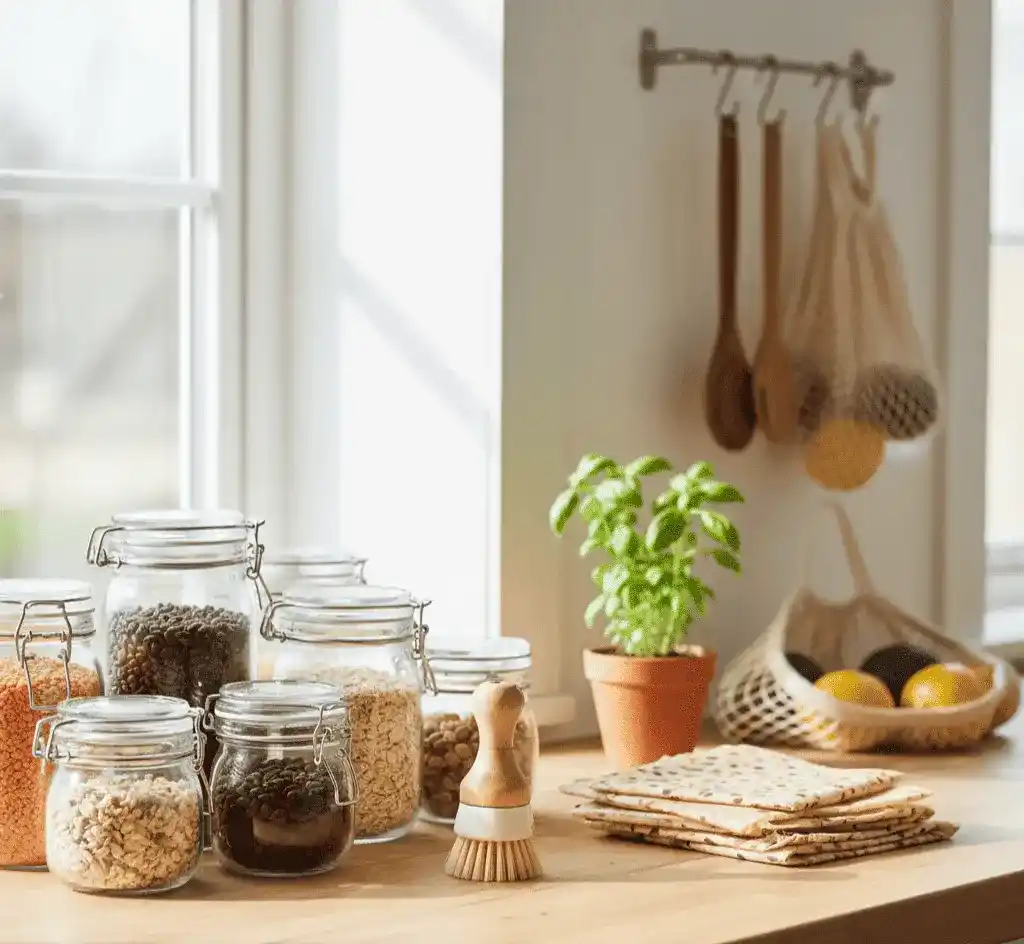
Introduction: The Heart of a Green Home
The kitchen is often called the heart of the home, where nourishment begins. However, it is also where we generate the most waste—from single-use plastic wraps to non-recyclable sponges. At Leaf Loop, we believe that transforming your space into a sustainable kitchen is one of the most impactful steps you can take towards an eco-friendly lifestyle. This comprehensive guide will equip you with the knowledge and sustainable kitchen swaps to create a space that’s healthier for you, your family, and the Earth.
1. Ditching Single-Use Plastics for Reusable Alternatives
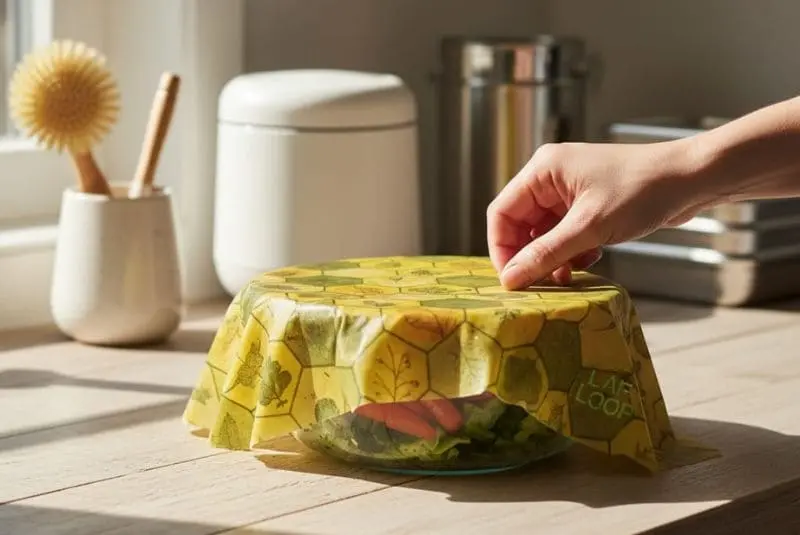
The war on waste starts with your daily habits. Plastic cling wrap is an environmental nightmare; it is non-recyclable and ends up in landfills for centuries.
- Beeswax Wraps vs. Plastic Wrap: The best sustainable kitchen swaps involve natural materials. Beeswax wraps are made from organic cotton infused with beeswax, jojoba oil, and tree resin. They are washable, reusable, and completely compostable.
- Silicone Baking Mats & Lids: Stop buying rolls of parchment paper or aluminum foil. Silicone mats provide a non-stick surface for years. Similarly, stretchable silicone lids create an airtight seal on any bowl, preserving food freshness better than plastic.
- Reusable Un-paper Towels: Millions of trees are cut down annually for paper towels. Swapping them for bamboo or cotton reusable towels can save you over $100 a year.
2. Upgrading Cleaning Tools & Non-Toxic Materials
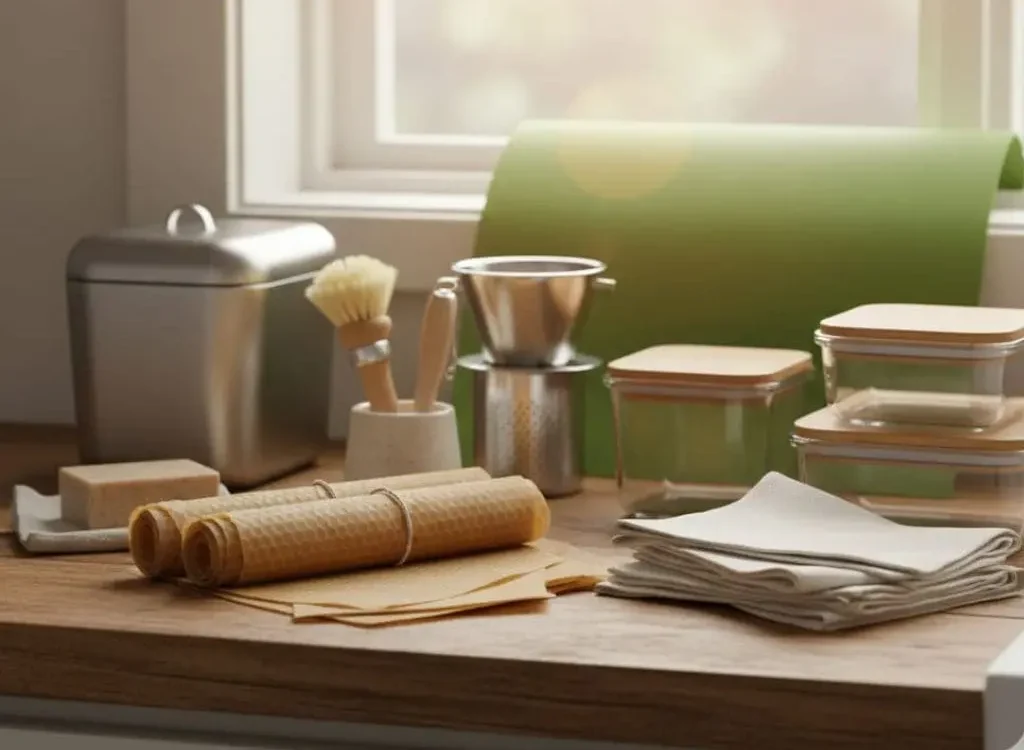
Standard yellow-and-green sponges are made of synthetic plastic that sheds microplastics into our water systems.
- Bamboo Dish Brushes: Naturally antibacterial and aesthetic, these brushes use natural sisal bristles. Once worn out, they are 100% compostable.
- Eco-Friendly Cleaning Solutions: Ditch chemical sprays for DIY cleaners. White vinegar, baking soda, and lemon juice can tackle most kitchen tasks safely.
- Durable Kitchenware: Transition from plastic Tupperware to borosilicate glass or stainless steel. Glass is non-porous, meaning it won’t hold onto smells or stains from last night’s pasta sauce, and it won’t leach BPA into your food.
3. The Philosophy of Sustainable Cooking & Cookware
Your choice of pans and food has a direct impact on the planet.
- Cast Iron & Stainless Steel: Many non-stick pans are coated with chemicals like PFOA and PFAS that release toxic fumes when heated. Investing in high-quality cast iron or stainless steel is a permanent sustainable kitchen swap because these materials can last a lifetime.
- Plant-Forward Eating: Livestock farming is a major contributor to greenhouse gases. Even reducing meat consumption by a few meals a week makes a massive difference.
- Local & Seasonal: Food transported long distances contributes to high emissions. Buying local ensures fresher produce and supports your community’s farmers.
4. Composting: Your Kitchen’s Secret Weapon
Food scraps make up about 30% of household waste. When they rot in a landfill, they produce methane gas. Composting turns this waste into “black gold.”
The Science of the Bin: Balancing Greens and Browns
A successful compost pile requires a balance:
- Greens (Nitrogen-rich): Fruit peels, veggie cores, and coffee grounds. They provide protein for microorganisms.
- Browns (Carbon-rich): Shredded cardboard, dry leaves, and nut shells. They provide energy and airflow.
Quick Sorting Guide:
| Category | What to Compost (Green Light) | What to Avoid (Red Light) |
|---|---|---|
| Kitchen Scraps | Fruit peels, Veggie cores, Coffee grounds | Meat, Fish, Dairy products |
| Paper & Wood | Non-glossy cardboard, Nut shells | Glossy magazines, Pet waste |
| Special Items | Crushed eggshells, Plastic-free tea | Oily foods, Diseased plants |
Leaf Loop Tip: If your compost smells, it’s too wet. Add more “Browns” and stir to introduce oxygen.
5. Energy Efficiency & Water Conservation
A truly sustainable kitchen accounts for every resource.
- Smart Cooking Habits: Match your pan size to the burner. Use lids to trap heat—this cooks food faster and saves significant energy.
- Vampire Electronics: Small appliances like toasters and coffee makers draw power even when turned off. Unplug them when not in use.
- Water Saving: Fix leaks promptly. When washing dishes by hand, fill one basin with wash water and another with rinse water instead of letting the tap run.
- Residual Heat: Turn off your oven or burners a few minutes early; the residual heat will finish the cooking process for free.
6. Reducing Food Waste at the Source
The most effective sustainable kitchen swap is consuming what you already have.
- Meal Planning: Plan your week to buy only what you need, reducing impulse buys.
- “Use It Up” Strategy: Designate one day a week to cook meals using ingredients that are about to spoil.
- Bulk Buying: Embrace the bulk shopping lifestyle by bringing your own glass jars to local stores to avoid plastic packaging.
Final Thought: A Journey, Not a Destination
A sustainable kitchen is built one swap at a time. You don’t need to replace everything at once—wait until your current tools wear out, then choose the green alternative. By reducing plastics and synthetic chemicals, you are protecting your family while supporting a circular economy.